Herbal Care · · 9 min read
Lookman-e-Hayat Oil for Face & Pimples: An Honest Answer
Lookman-e-Hayat oil for face use, answered honestly: what it can do, why it can make pimples worse on oily skin, and how to patch test before you try.
By Yousuf Munir · Updated
Lookman-e-Hayat oil can be used on the face as a light massage and moisturising oil, but it is not an acne treatment. On oily or acne-prone skin, a rich sesame-based oil applied heavily can make breakouts worse. Patch test first, use two or three drops at night, and see a dermatologist for persistent acne.
"Is Lookman-e-Hayat Tel good for face pimples?" is one of the most-asked questions about this oil — and most answers you will find online were written to sell you a bottle. We sell this oil too, but here is the answer we would give a family member.
Short version: it can be used on the face as a massage and moisturising oil — but it is not an acne treatment, and on acne-prone skin a heavy hand can make breakouts worse.
What Lookman-e-Hayat oil actually is
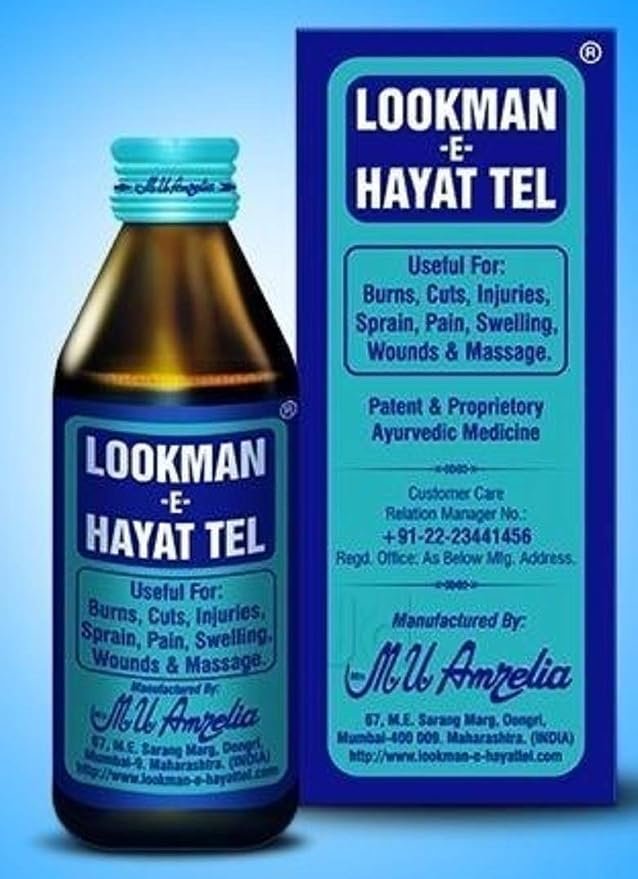
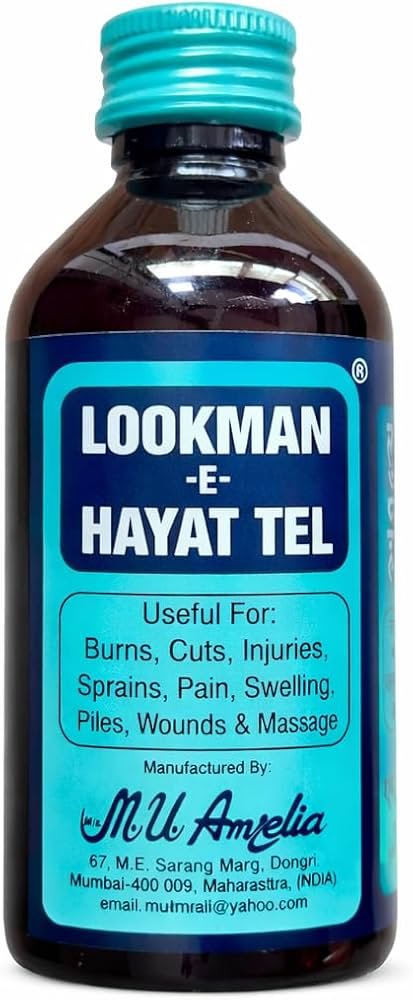
Lookman-e-Hayat Tel is a traditional herbal oil with a declared composition of just two ingredients: 97% til (black sesame) seed oil and 3% guggul (Commiphora mukul) resin. It has been used across South Asia for generations as a massage oil for skin and hair. It is a cosmetic, traditional product — not a registered medicine, and nothing in this article is medical advice.
That short ingredient list matters more on the face than anywhere else on the body. Facial skin is thinner and more reactive than the skin on your arms or scalp, so the fewer things a product contains, the easier it is to work out what your skin is responding to. With two ingredients, there are only two suspects.
It also means there is no clever formulation at work here. No actives, no exfoliating acids, no oil-control system, no anything designed by a lab to do a specific job on facial skin. It is a carrier oil with a resin in it, and on the face it behaves exactly like a carrier oil with a resin in it. If you want the longer version of what goes into the products we stock and what we refuse to stock, our halal ingredients page and the what we never use page are both blunter than most brand pages you will read.
Can you put it on your face at all?
Yes. Many people use a few drops as a light face massage oil or an overnight moisturising layer, and traditionally it is massaged into old, fully healed marks. Sesame oil is a classic carrier oil in South Asian skincare — rich, softening, and generally well tolerated on normal to dry skin.
What it is not is a product anyone designed for faces. The same bottle is sold for body massage, for champi, and for general dry skin, and it was never reformulated lighter for the face. That is not a fault — it is just the honest starting point. It means the way you use it matters far more than it would with a purpose-built face oil.
Four rules that make face use sensible
- Patch test first. A drop on the inner forearm, wait 24 hours. Herbal does not mean allergy-proof — sesame is a recognised allergen for some people, and a reaction on a patch of forearm is a much smaller problem than a reaction across your whole face.
- Use a small amount. Two or three drops warmed between the fingers is a face's worth. More is not better — the surplus just sits on the surface, transfers to your pillowcase, and gives your pores more to deal with overnight.
- Keep it away from the eyes. If any does get in, rinse with clean water. It is an oil, not an eye product, and it was never meant to go near them.
- Never apply it to broken skin. Fresh pimple wounds, picked spots, scratches, cuts or any unhealed burn are off-limits. For a fresh burn the first steps are cool running water for 10–20 minutes and a doctor — never oil of any kind. This oil is only ever for old, fully healed marks on intact skin.
Not sure whether it suits your skin? Message us on WhatsApp at 0301 2973886 before you order — a real person replies, and if the honest answer is "this is not the right product for your skin", that is the answer you will get. Every order ships sealed, cash on delivery anywhere in Pakistan, so you can inspect the bottle at your door before you pay a rupee.
The pimples question, honestly
Here is where we will not oversell. Sesame oil is a rich oil. On skin that is already oily or acne-prone, layering a rich oil can trap sebum and make breakouts more likely, not less. Guggul has a long history in traditional practice, but at 3% of a massage oil, this product is not formulated as — and must not be treated as — an acne remedy.
It is worth naming where the opposite impression comes from. Search the question and what you mostly get back is not an answer but a product listing: a line lifted off the packaging, a bullet list of everything the oil has ever been associated with anywhere, and a buy button underneath. None of that is evidence that a sesame-based massage oil clears acne, and we are not going to dress it up as if it were.
If you have pimples and still want to try it
- Use it sparingly, at night only, on the drier areas of the face rather than the oily T-zone.
- Give it a fair trial on a small area first — one cheek, or the dry patch that bothers you — before you commit the whole face to it.
- Stop at the first sign of new breakouts. That is your skin's answer, and it outranks any article, including this one.
- If acne is persistent or painful, the right person to see is a dermatologist, not an oil seller. Persistent acne has real treatments; a massage oil is not one of them.
Where it fits better on the face
Where this oil earns its reputation on the face is the gentler jobs: softening dry patches, an occasional evening massage, and traditional daily massage into old, fully healed marks — with patience measured in weeks, and what people notice varying a great deal from person to person.
In practice that means the dry, tight skin along the jaw and cheeks in winter; the flaky patch beside the nose that no amount of face wash fixes; and the after-shave dryness men get on the neck. These are moisturising jobs, and a rich oil is genuinely good at them. For the full picture of the traditional uses this oil is known for, see Lookman-e-Hayat Oil: Uses, Benefits, Price & How to Use.
A sensible evening routine
If you are going to use it on your face, the routine that gives it the best chance is boring and short. Wash your face as normal and pat it almost dry. Warm two or three drops between your palms. Press them onto the skin rather than dragging them around — the face does not need scrubbing. Skip the T-zone if you are oily there. Leave it overnight, use a clean pillowcase, and wash your face in the morning as usual. Then judge it after two or three weeks, not after two or three nights.
If your skin is oily, send it to your hair instead
For a lot of people with oily or congested skin, the sensible answer is that this oil belongs above the hairline, not on the face at all. That is where a rich sesame oil is at its most at home, and the traditional method has been refined over generations — our guide to champi with herbal oil covers the warming, the massage and how long to leave it on. Nothing is wasted if the face is not the right home for it.
Trying it sensibly
If you want to test how your skin responds without committing to a full bottle, the small size exists for exactly this:
- Lookman-e-Hayat Herbal Oil — 50 ml, Rs 1,200 — the trial size
- Lookman-e-Hayat Herbal Oil — 100 ml, Rs 2,200 — better per-ml value for regular use
Both ship sealed, cash on delivery across Pakistan, and both are the same oil in different quantities — the 50 ml is not a lesser version. To order or ask anything at all, message WhatsApp 0301 2973886, or browse our oils. If you want the size-by-size cost breakdown before you decide, we have written that out in full in our Lookman-e-Hayat oil price in Pakistan guide. Reading in Roman Urdu? The same bottles are at Lookman-e-Hayat Tel 50ml and 100ml.
And if the honest conclusion for your skin is that a rich oil is the wrong thing for your face right now, that is a perfectly good outcome for this article. We would rather sell you nothing today than sell you something that gives you a worse week.
Lookman-e-Hayat Tel is a traditional herbal oil for external use only. It is not a medicine and not a substitute for medical care. For persistent skin problems, please see a doctor or dermatologist.
Frequently asked questions
Is Lookman-e-Hayat Tel good for face pimples?
It is not an acne treatment and we make no claim that it clears pimples. On acne-prone skin, a rich sesame-based oil applied heavily can make breakouts worse. If you try it, use a tiny amount at night, patch test first, and stop if your skin reacts. For persistent or painful acne, see a dermatologist.
Can I use Lookman-e-Hayat oil on my face every day?
On normal to dry skin, a few drops as a night oil is a common traditional use. Patch test on your inner forearm first, keep it away from the eyes, and never apply it over broken skin. If your skin is oily or congested, use it sparingly or keep it for the hair instead.
Does it remove pimple marks?
We make no claim that it removes marks, and you should be wary of anyone who does. What we can honestly describe is the traditional use: it is massaged into old, fully healed marks over a period of weeks as part of a routine, and what people notice varies a great deal from person to person. It must never be used on fresh or healing pimple wounds.
Is Lookman-e-Hayat oil non-comedogenic?
No such claim is made for this oil. Sesame oil is moderately rich, so if your skin clogs easily, use it very sparingly on dry areas only, or keep it for the body and hair instead — a weekly champi is where a rich oil like this is most at home.