Of the three, coconut oil has the strongest evidence: it is one of the few oils shown to penetrate the hair shaft rather than sit on top of it, which is what reduces protein loss and breakage. Almond oil is the best for slip and conditioning. Kalonji is the traditional scalp choice. Most good hair oils use more than one, for exactly that reason.
The short comparison
| Coconut (nariyal) | Sweet almond (roghan-e-badam) | Kalonji (black seed) |
|---|
| Weight | Medium, solid when cold | Light | Light-medium |
| Main strength | Penetrates the shaft; reduces protein loss | Slip and conditioning; easy to comb out | Traditional scalp care; the desi smell people expect |
| Evidence | Strongest of the three | Modest | Traditional use, limited clinical work |
| Best for | Dry, breakage-prone hair | Detangling, fine hair, sensitive noses | Flaky or itchy scalp |
| Watch out | Some find it heavy; solid below ~24°C | Tree nut allergen | Strong smell some people dislike |
Coconut oil — the one with the research behind it
Most oils coat the hair. Coconut oil is unusual in that its main fatty acid is small and straight enough to actually move into the hair shaft. That matters because a lot of everyday damage happens when hair swells with water during washing and then dries — oil inside the shaft reduces that swelling, and less swelling means less breakage.
This is the closest thing to a genuinely evidence-backed claim in hair oiling, which is why it is worth being precise about: it reduces damage. It does not grow hair.
Sweet almond oil — the one that makes the routine survivable
Almond oil is light and slippery. On its own that sounds trivial, but it is the difference between an oil you use every week and one you use twice and abandon. It spreads across the scalp without dragging, and it combs out afterwards without three rounds of shampoo.
Allergen warning, and it is a serious one: almond is a tree nut. If anyone in the house has a nut allergy, an almond-based hair oil is not for you — including oils that list it well down the ingredient list.
Kalonji oil — the traditional one
Kalonji (Nigella sativa, black seed) is the scalp ingredient people in this region reach for, and it is what makes a hair oil smell like a desi hair oil rather than a supermarket one. The traditional use is long and consistent; the clinical evidence is thinner than the marketing usually implies. We would rather say that than pretend otherwise.
What none of them do
No oil on this page — or any page — will:
- Regrow hair on a bald patch.
- Reverse male-pattern baldness.
- Treat alopecia, thyroid-related hair loss, iron deficiency, or hair loss from medication.
If hair is coming out in handfuls, coming out in patches, or thinning fast, that is a doctor and a blood test, not a bottle. Oils help hair that already exists stay on your head longer. That is a real benefit, and it is the honest size of it.
So which should you pick?
- Dry, rough, breaking hair → coconut-led.
- Fine hair, or you hate the heaviness → almond-led.
- Flaky, itchy scalp → kalonji in the blend, and see a doctor if it does not settle.
- You just want one bottle → a blend, which is why most traditional oils are blends.
Our blend
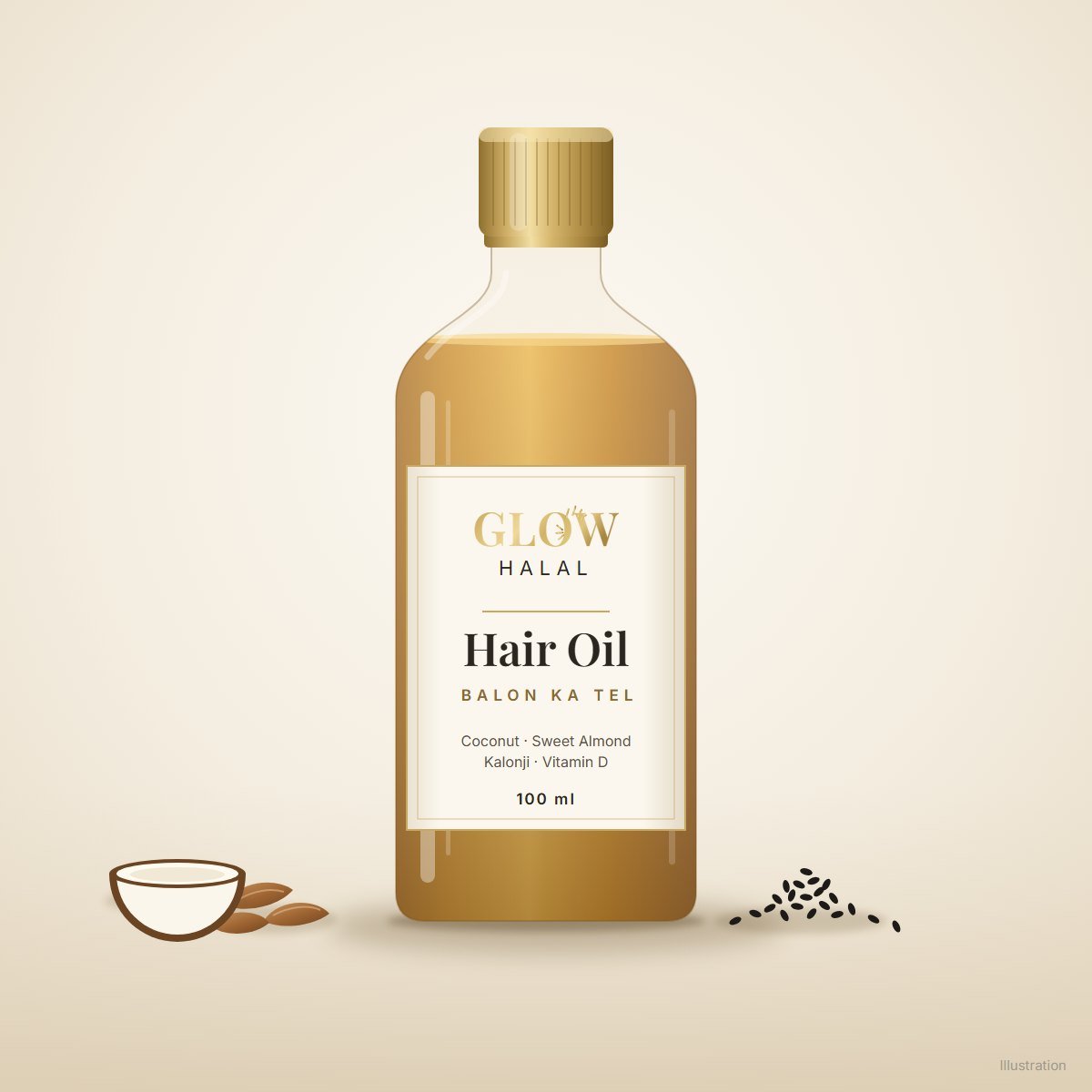
Glow Halal Hair Oil uses all three plus vitamin D — coconut oil, sweet almond oil, kalonji oil, vitamin D, and nothing else. No mineral oil, no undisclosed fragrance, no long list of extracts present in amounts too small to matter. Rs 1,200 for 100 ml, Rs 2,000 for 200 ml, Cash on Delivery across Pakistan.
It contains almond (a tree nut) and coconut. Do not use it if you have a nut or coconut allergy.
FAQ
Can I mix them myself?
Yes, and it is cheaper. Roughly 2 parts coconut, 1 part almond, a small amount of kalonji. Make small batches — home blends have no preservative and go rancid.
Which is best for hair fall?
None of them stops hair fall caused by a medical or hormonal issue. What a good oil does is reduce breakage, so less hair snaps off during combing and washing. That often looks like less hair fall, and it is a real improvement — it is just a different mechanism from what the adverts imply.
Hot oil or room temperature?
Slightly warm spreads better. Warm it between your palms or stand the bottle in hot water — never on direct heat.
General information, not medical advice. Sudden or patchy hair loss needs a doctor.